AFMプローブ
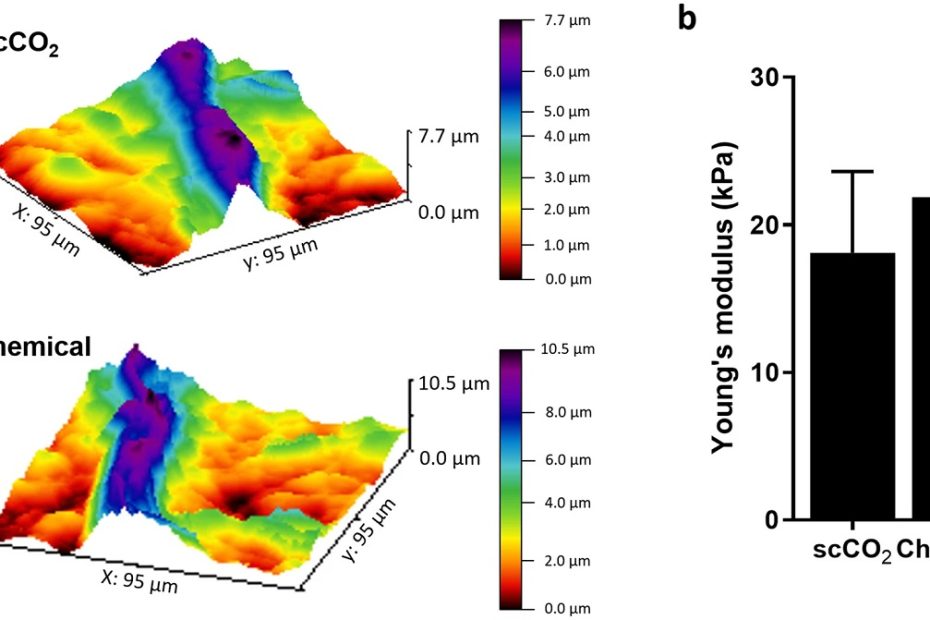
Cytoskeletal disorganization underlies PABPN1-mediated myogenic disability
Muscle wasting is connected with changes in various cellular mechanisms that influence protein homeostasis, transcription, protein acetylation and different metabolic pathways. * Scientific studies have… Read More »Cytoskeletal disorganization underlies PABPN1-mediated myogenic disability
In‐situ force measurement during nano‐indentation combined with Laue microdiffraction
A NANOSENSORS™ self-sensing self-activating Akiyama probe was used in a home-built Scanning Probe Microscope for this interesting research article. *Florian Lauraux, Sarah Yehya, Stéphane Labat,… Read More »In‐situ force measurement during nano‐indentation combined with Laue microdiffraction
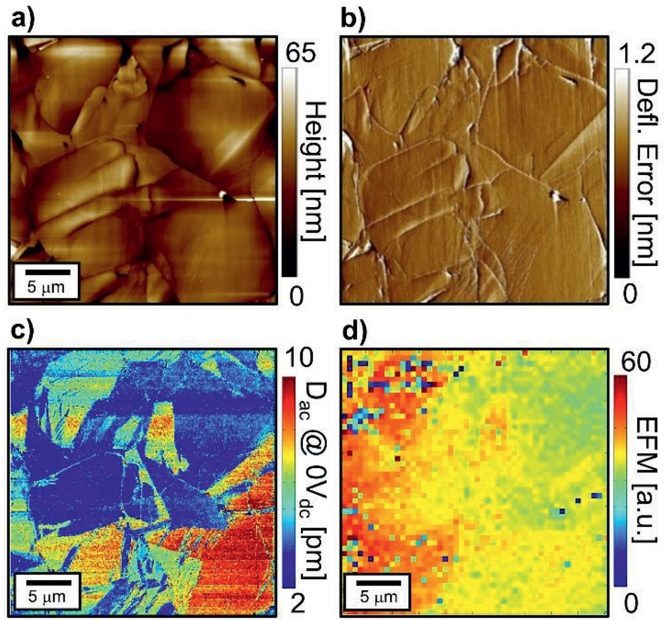
Nanoscale Charge Accumulation and Its Effect on Carrier Dynamics in Tri-cation Perovskite Structures
Nanoscale investigations by scanning probe microscopy have provided major contributions to the rapid development of organic–inorganic halide perovskites (OIHP) as optoelectronic devices. Further improvement of… Read More »Nanoscale Charge Accumulation and Its Effect on Carrier Dynamics in Tri-cation Perovskite Structures
Multi-Channel Exploration of O Adatom on TiO2(110) Surface by Scanning Probe Microscopy
In the article “Multi-Channel Exploration of O Adatom on TiO2(110) Surface by Scanning Probe Microscopy” Huan Fei Wen, Yasuhiro Sugawara and Yan Jun describe how… Read More »Multi-Channel Exploration of O Adatom on TiO2(110) Surface by Scanning Probe Microscopy
Plant-Based Scaffolds Modify Cellular Response to Drug and Radiation Exposure Compared to Standard Cell Culture Models
Plant-based scaffolds present many advantages over a variety of biomaterials.* Recent studies explored their potential to be repopulated with human cells and thus highlight a… Read More »Plant-Based Scaffolds Modify Cellular Response to Drug and Radiation Exposure Compared to Standard Cell Culture Models
Electric-field-driven non-volatile multi-state switching of individual skyrmions in a multiferroic heterostructure
Electrical manipulation of skyrmions attracts considerable attention for its rich physics and promising applications. To date, such a manipulation is realized mainly via spin-polarized current… Read More »Electric-field-driven non-volatile multi-state switching of individual skyrmions in a multiferroic heterostructure


![Figure 2 from “Electric-field-driven non-volatile multi-state switching of individual skyrmions in a multiferroic heterostructure” by Yadong Wang et al.: Electric-field-induced switching of individual skyrmion. The transferred average strain εave and corresponding magnetic domain evolution processes in the d ~ 350 nm a [Pt/Co/Ta]12 and b [Pt/Co/Ta]8 nano-dots in a cycle of E ranging from +10 to −10 kV cm−1. Positive εave (red dots) represents tensile strain while negative εave (blue dots) represents compressive strain. μ0H represents the external magnetic field except that from the MFM tip and here μ0H is equal to be 0 mT. The inset of b illustrates the spin texture of the magnetic domain that is encompassed by the red box. The stripe domain enclosed by the black box shows the initial state of the magnetic domain evolution path. The gray dots represent the corresponding electric field for the MFM images. The MFM contrast represents the MFM tip resonant frequency shift (Δf). The scale bar represents 250 nm. NANOSENSORS™ PPP-LM-MFMR low moment magnetic AFM probes were used](https://www.nanosensors.com/blog/wp-content/uploads/2022/11/figure-2-from-Electric-field-driven-non-volatile-multi-state-switching-of-individual-skyrmions-in-a-multiferroic-heterostructure-by-Yadong-Wang-et-al-2020-NANOSENSORS-PPP-LM-MFMR-2-930x547.jpg)